
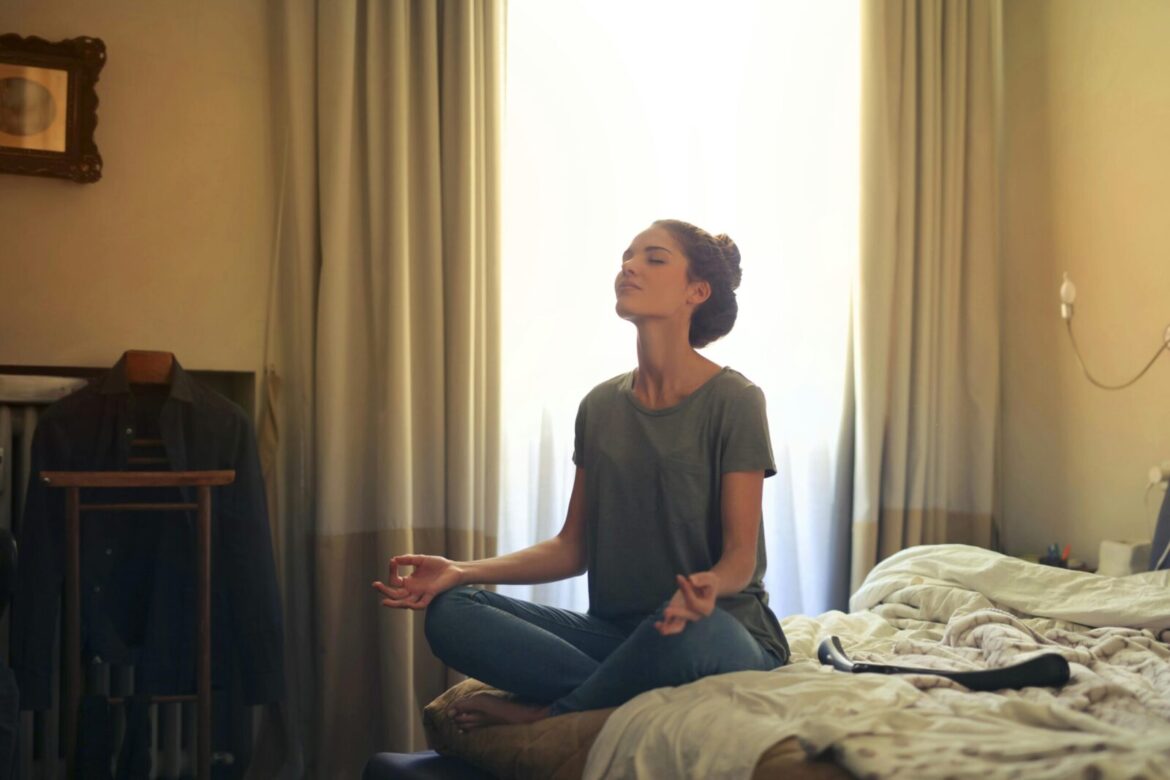
When your office is your living room, the boundaries between professional demands and personal life often blur into a single, high-pressure hum. Without the physical commute to act as a buffer, a chaotic workday can quickly bleed into your evening, leaving you feeling drained and disconnected. Finding stillness in a work-from-home environment isn’t about waiting for the work to end; it’s about creating “pockets of peace” throughout the day to reset your nervous system.
Create a Sensory “Work-Mode” Boundary
Stillness begins with a clear mental shift. Since you lack a physical office, use sensory cues to signal the start and end of your workday. This might mean lighting a specific “focus” candle or playing a particular lo-fi playlist only during work hours. When the day becomes overwhelming, a simple ritual—like stepping away to wash your hands with cold water or changing the scent in your diffuser—can act as a “pattern interrupt,” pulling you out of the chaos and back into your body.
Practice the “Three-Minute Micro-Meditation”
You don’t need an hour of silence to find stillness. When the back-to-back meetings and notifications reach a fever pitch, implement the three-minute rule. Close your laptop, sit back, and focus entirely on your breath. Inhale for four counts, hold for four, and exhale for eight. This simple physiological shift signals to your brain that you are safe, lowering your cortisol levels and allowing you to return to your tasks with a “heart-first” perspective rather than a reactive one.
Establish “Visual Quiet” in Your Workspace
Our external environment reflects our internal state. If your desk is covered in half-empty coffee mugs, stray papers, and tangled cords, your mind will feel equally cluttered. Take five minutes every few hours to “reset” your visual field. Clear the debris, put away items that aren’t for the current task, and ensure there is at least one item of beauty—a small plant, a photo, or a piece of art—within your line of sight. Visual quiet fosters mental stillness.
Take a “Tech-Free” Movement Break
The most common mistake of remote work is moving from a large screen (the computer) to a small screen (the phone) during breaks. To find true stillness, your eyes and mind need a complete digital fast. Step outside for ten minutes without your phone. Feel the air, watch the movement of the trees, or simply walk a few laps around your garden. This physical detachment from the “grid” allows your brain to enter a state of “soft fascination,” which is scientifically proven to restore focus and calm.
Use a Transition Ritual to “Close the Shop”
The chaos of a work-from-home day often stems from the fact that work never truly “leaves” the house. At the end of your day, perform a physical closing ritual. Shut down your computer completely, put your notebook in a drawer, or literally throw a beautiful cloth over your workspace. This visual signal tells your heart and mind that the “work sanctuary” is closed and the “home sanctuary” is now open, allowing you to transition into family time with a present and peaceful spirit.
Prioritize the “One-Task” Focus
Chaos is often just a byproduct of multitasking. When we try to answer an email, help a child with homework, and think about dinner simultaneously, stillness is impossible. Commit to “single-tasking.” Set a timer for 25 minutes of deep work followed by a 5-minute stillness break. By giving your full presence to one thing at a time, you eliminate the frantic energy of “doing everything at once” and replace it with a steady, peaceful flow.
Leave a Reply