
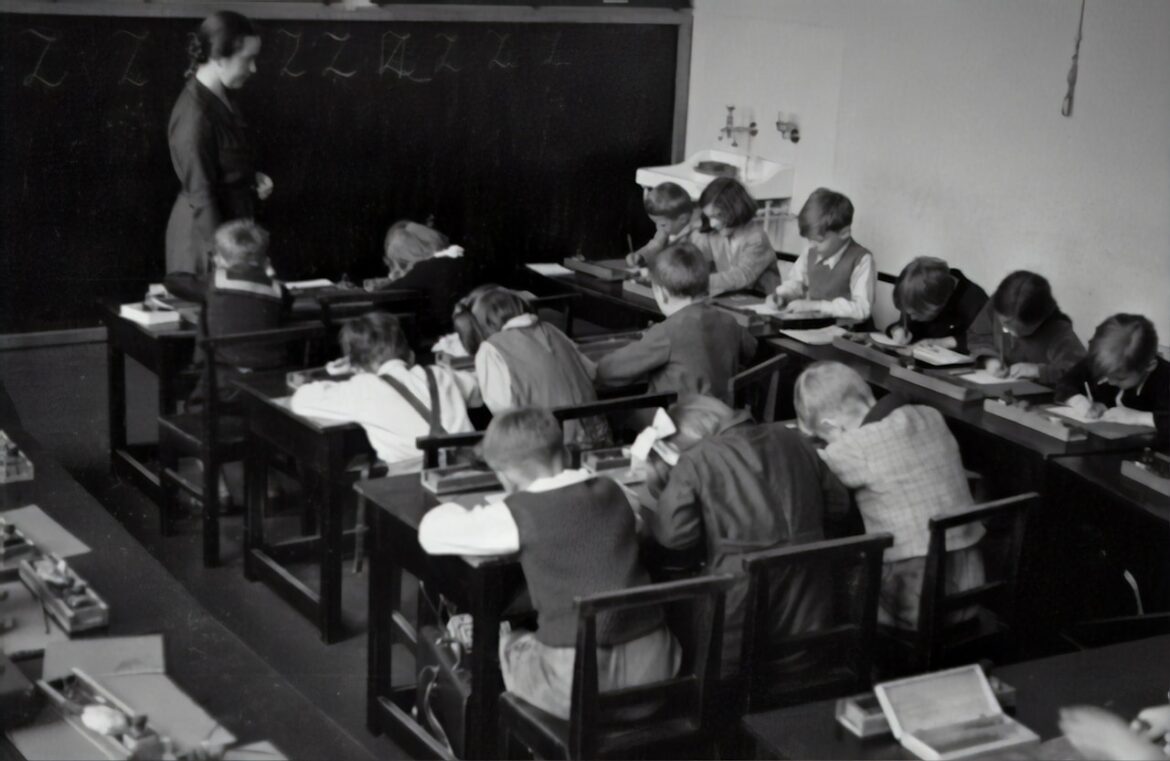
The educational landscape has transformed dramatically since the 1980s, with societal norms and legal frameworks evolving significantly. What was once considered acceptable, or even standard, practice in classrooms during that decade might now lead to immediate dismissal for educators. These shifts reflect a greater emphasis on student well-being, safety, and rights, alongside changes in disciplinary approaches and technological integration.
1. Administering Corporal Punishment
In the 1980s, corporal punishment, including spanking or paddling, was a common disciplinary measure in many schools across the United States. The Supreme Court had upheld its legality in the 1977 case Ingraham v. Wright, leaving it to states to decide. Some schools even displayed paddles prominently as a deterrent. In the 1987–1988 school year in a central Florida district, studies indicated that corporal punishment was not necessarily used as a last resort, suggesting its more casual application. By contrast, today, corporal punishment is widely banned in public schools across most states. Its use is now considered archaic and is grounds for immediate dismissal, reflecting a societal shift towards non-violent disciplinary methods and an increased focus on child protection. The prevalence of school corporal punishment has steadily declined, from 4% of schoolchildren in 1978 to less than 0.5% in recent years.
2. Public Humiliation as Discipline

Teachers in the 1980s frequently employed public humiliation as a disciplinary tactic. This could range from making students stand with their noses in a chalk circle, publicly reading private notes, or flipping over messy desks. Such practices were common, and the emphasis was often on public embarrassment to enforce behavior. In contrast, modern educational philosophy prioritizes fostering a positive and respectful learning environment. Today’s educators are trained to use constructive feedback and avoid practices that could undermine a student’s self-esteem or create emotional distress. The Family Educational Rights and Privacy Act (FERPA) of 1974 also established greater protections for student records and privacy, indirectly supporting a more respectful approach to student interactions. Disciplinary actions are now expected to be private and constructive, rather than public spectacles.
3. Unsupervised Classrooms
During the 1980s, it was not uncommon for teachers to leave their classrooms unsupervised for brief periods, such as to use the restroom or run an errand. A designated student might be tasked with monitoring the class, relying on the fear of getting in trouble to maintain order. This practice underscored a different trust dynamic and a less stringent approach to supervision. Today, student safety is paramount, and schools have much stricter protocols. Educators are expected to maintain constant vigilance and supervision to prevent accidents, bullying, or other incidents. The concept of leaving a classroom entirely to a student monitor is now considered a significant safety lapse, leading to immediate dismissal due to potential liability and the paramount importance placed on student supervision.
4. Smoking on School Grounds by Teachers
In the 1980s, it was not unusual for teachers to smoke on school grounds, and some even within the classroom. This practice reflected broader societal norms where smoking was more prevalent and less regulated, especially in public spaces. For instance, smoking areas for students were even a thing in some schools. Today, however, policies regarding smoking are far more stringent in educational institutions. The health risks associated with smoking are widely recognized, and schools are considered environments that should promote health and well-being. A teacher smoking on school property, let alone in front of students, would be a clear violation of modern health codes and professional conduct standards, leading to immediate dismissal.
5. Unrestricted Use of Personal Technology by Students
The 1980s predated the widespread adoption of personal technology like smartphones, so student use of such devices in classrooms was not an issue. Desktop computers were beginning to appear in schools, primarily for programming. In contrast, today’s classrooms are grappling with the pervasive presence of smartphones. While technology is integrated into education, its use by students during instructional time is heavily regulated. Many schools now have strict policies banning or restricting the use of personal electronic devices, with teachers finding it difficult to manage student attention when phones are accessible. The prevalence of phones in schools has fluctuated, with policies tightening again in recent years. A teacher allowing unchecked, personal technology use during class time would likely be seen as a failure to manage the classroom and maintain an effective learning environment, leading to disciplinary action.
6. Ignoring Student Allergies and Dietary Needs
In the 1980s, homemade snacks and treats brought by parents for classroom parties or birthdays were common, with little to no attention paid to ingredients or potential allergens. Teachers would not typically intervene or question the nature of these food items. Today, the awareness and management of student allergies and dietary restrictions are critical components of school safety protocols. Schools implement strict guidelines for food brought into the classroom, often requiring pre-packaged, allergen-free options or having policies against homemade goods altogether. A teacher who disregarded a known student allergy or dietary need could face severe consequences, including dismissal, due to the significant health risks involved.
7. Inadequate Background Checks for School Staff
In the 1980s, formal background screening for potential school employees was not as robust or standardized as it is today. While some states had laws requiring disclosure of criminal convictions, the thoroughness of the checks and the sharing of information between states were often lacking. For instance, Connecticut had been fingerprinting employees since the 1980s, but the law did not initially provide for disclosure of findings. This lack of comprehensive vetting meant that individuals with problematic histories could potentially be hired. In contrast, modern hiring practices for educators typically involve rigorous criminal background checks, fingerprinting, and verification processes. A failure to conduct thorough background checks or to adhere to current safety standards in hiring would be a major dereliction of duty, leading to immediate dismissal and significant legal repercussions for the school district.
Leave a Reply