
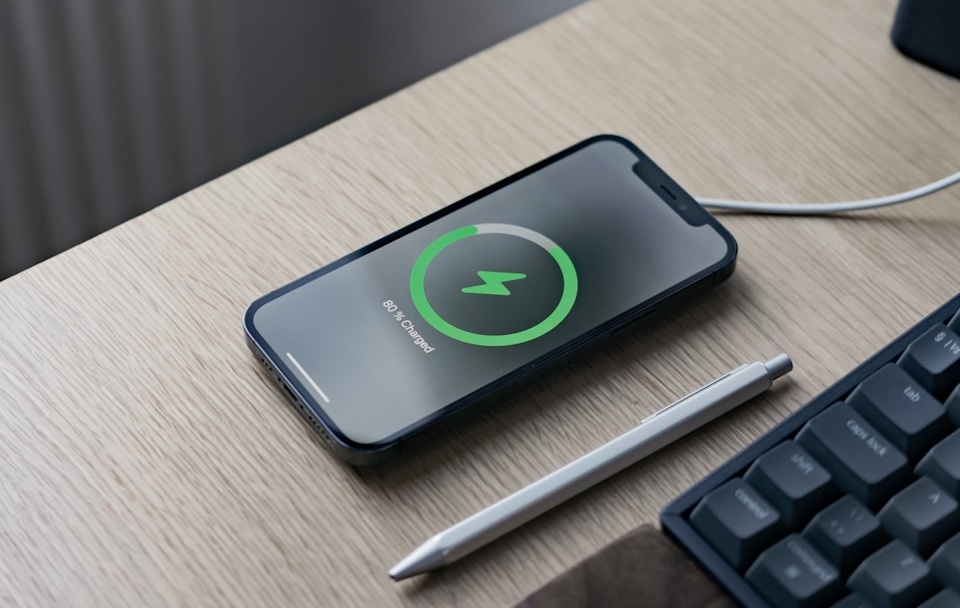
We’ve all been conditioned to feel a sense of relief when that little lightning bolt icon hits 100%. For most of us, leaving the house with anything less feels like a gamble. However, if you are wondering why your expensive smartphone suddenly struggles to hold a charge after just eighteen months, the answer lies in that very habit. Modern smartphones use Lithium-ion batteries, and while they are incredibly efficient, they are also chemically stressed by the way we treat them. According to battery engineers, the way you charge your phone today is likely the reason you’ll be forced to replace it tomorrow.
The “80/20” Rule and Avoiding Extremes
Lithium-ion batteries are at their happiest when they are in the middle of their capacity. Think of it like a rubber band; if you keep it stretched to its absolute limit or let it go completely slack, it loses its elasticity over time. You should aim to keep your battery between 20% and 80% as much as possible. Charging that final 20% requires higher voltage, which generates more internal heat and chemical stress. By staying in this “Goldilocks zone,” you significantly reduce the number of cycles your battery burns through.
Ending the Overnight Trickle Charge
Leaving your phone plugged in while you sleep is the most common way to degrade a battery. Once the phone hits 100%, it enters a state of trickle charging. Every time the battery drops even a fraction of a percent, the charger kicks back in to push it back to the limit. This keeps the battery in a high-voltage, high-stress state for six to eight hours every night. Most modern devices now have an Optimized Battery Charging setting that learns your sleep schedule and waits to finish the final part of the charge until just before you wake up.
Heat as the Silent Killer
If your phone feels hot to the touch while charging, you are actively reducing its lifespan. Chemical reactions inside the battery accelerate at high temperatures, leading to permanent capacity loss. Using your phone for heavy gaming or high-definition video while it is plugged in creates a double heat effect from both the processor and the charging coils. If you are charging your device, it is best to leave it alone. Additionally, thick cases can act as insulators that trap heat, so removing them during a charge can provide much-needed ventilation.
The Danger of the Deep Discharge
There is an old myth that you should let your battery die completely before charging it to calibrate the sensor. This was true for older battery types but is actively harmful to modern smartphones. Letting a phone hit zero can cause the battery to fall into a deep discharge state where the protection circuit might trip, potentially rendering the battery unable to hold a charge ever again. It is far better to plug in as soon as you hit the 20% warning, as frequent small top-ups are much better for long-term health than one massive charge.
Fast Charging as a Convenience
Ultra-fast chargers are engineering marvels, but they come at a significant cost to the hardware. Pushing a massive amount of current into a small battery cell creates internal friction and heat. You should treat fast charging as a convenience for when you are in a genuine rush rather than a constant necessity. If you are charging your phone on your desk at work or on your nightstand, a standard slow charger is a much better choice. Your battery will stay significantly cooler, preserving the integrity of the internal components for hundreds of extra cycles.
Leave a Reply