
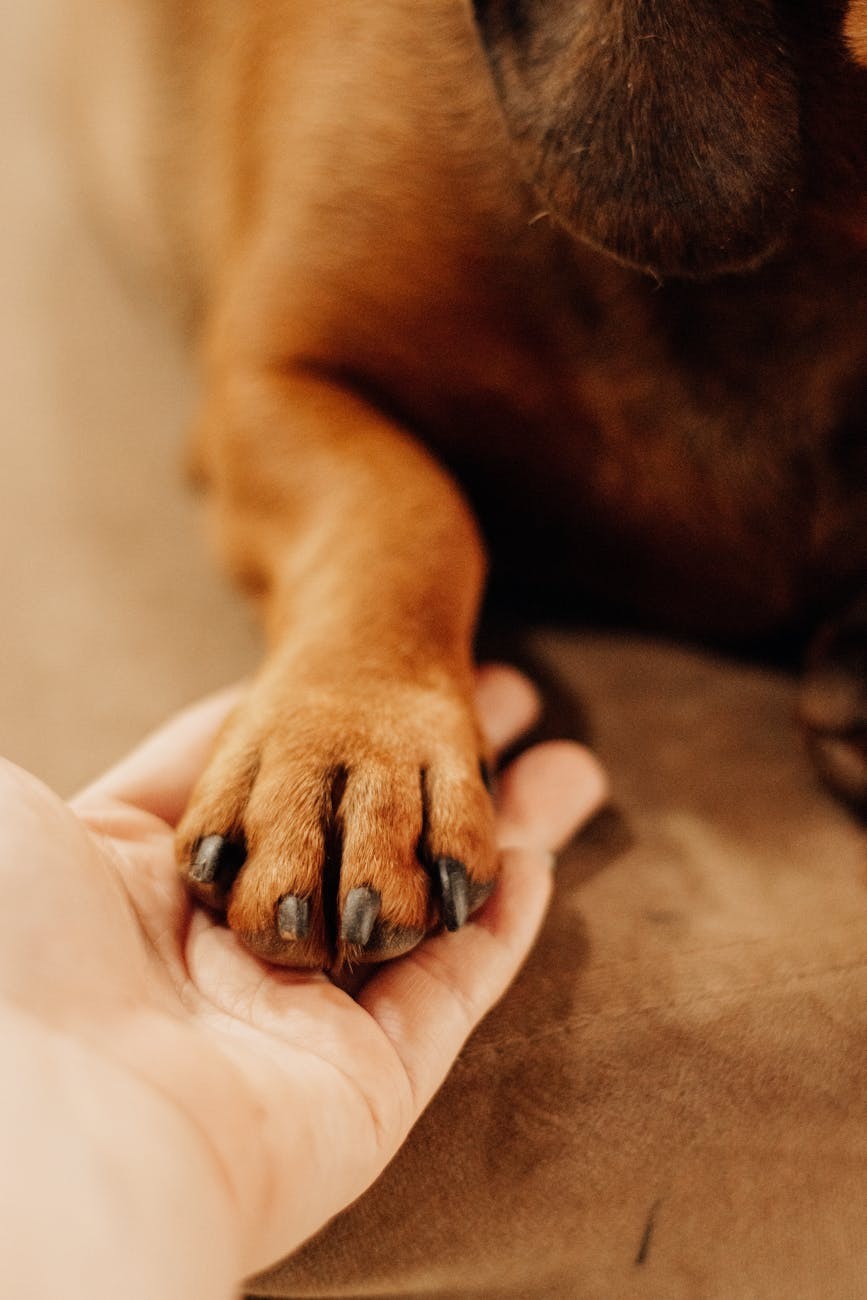
Understanding our canine companions’ behaviors often unlocks a deeper bond. When a dog places a paw on their human, it’s a gesture rich with meaning, stemming from their natural instincts and social cues. This seemingly simple act can convey a surprising range of emotions and intentions, from seeking attention to expressing affection and even signaling underlying anxiety. Observing the context surrounding this behavior, alongside your dog’s overall demeanor, provides crucial insight into their unique communication style.
A Gentle Nudge for Attention
Dogs, by nature, are social creatures, and a paw placed on you is often a direct request for your focus. This is particularly common when they feel overlooked or desire interaction, such as a good petting session or a game of fetch. They learn that this physical touch is an effective way to get your attention, especially if it has yielded positive results in the past. Imagine your dog, tail wagging gently, placing a paw on your lap while you’re engrossed in a book; it’s their subtle, yet clear, way of saying, “Hey, I’m here, and I’d love some of your time.” This behavior is a testament to the strong bond they share with their owners, actively seeking to maintain that connection through direct physical engagement.
Expressing Affection and Trust
Placing a paw on an owner can be a profound display of affection and a deep sense of trust. In the canine world, allowing vulnerability, like exposing a soft paw, is a sign of comfort and security. When your dog rests their paw on you, they are essentially saying they feel safe and content in your presence. This is akin to how they might interact with their littermates or their mother, seeking reassurance and expressing their bond. It’s a subtle, yet powerful, indication that they view you as a source of comfort and security, a core member of their pack, and they are comfortable enough to show you their softer side. This gesture solidifies the emotional connection, reinforcing the idea that you are a trusted companion.
Seeking Comfort or Reassurance
Sometimes, a paw on you is an indication that your dog is feeling a bit uneasy or seeking reassurance. This might happen during a thunderstorm, when there are loud noises, or if they are in an unfamiliar environment. The physical contact with you serves as a grounding mechanism, helping them to feel more secure and less anxious. By placing their paw on you, they are drawing strength and comfort from your presence, reinforcing the feeling of safety and stability. It’s their way of seeking an anchor in moments of distress, a silent plea for you to alleviate their worries. This behavior highlights their reliance on their human family for emotional support during challenging times.
A Learned Behavior for Interaction
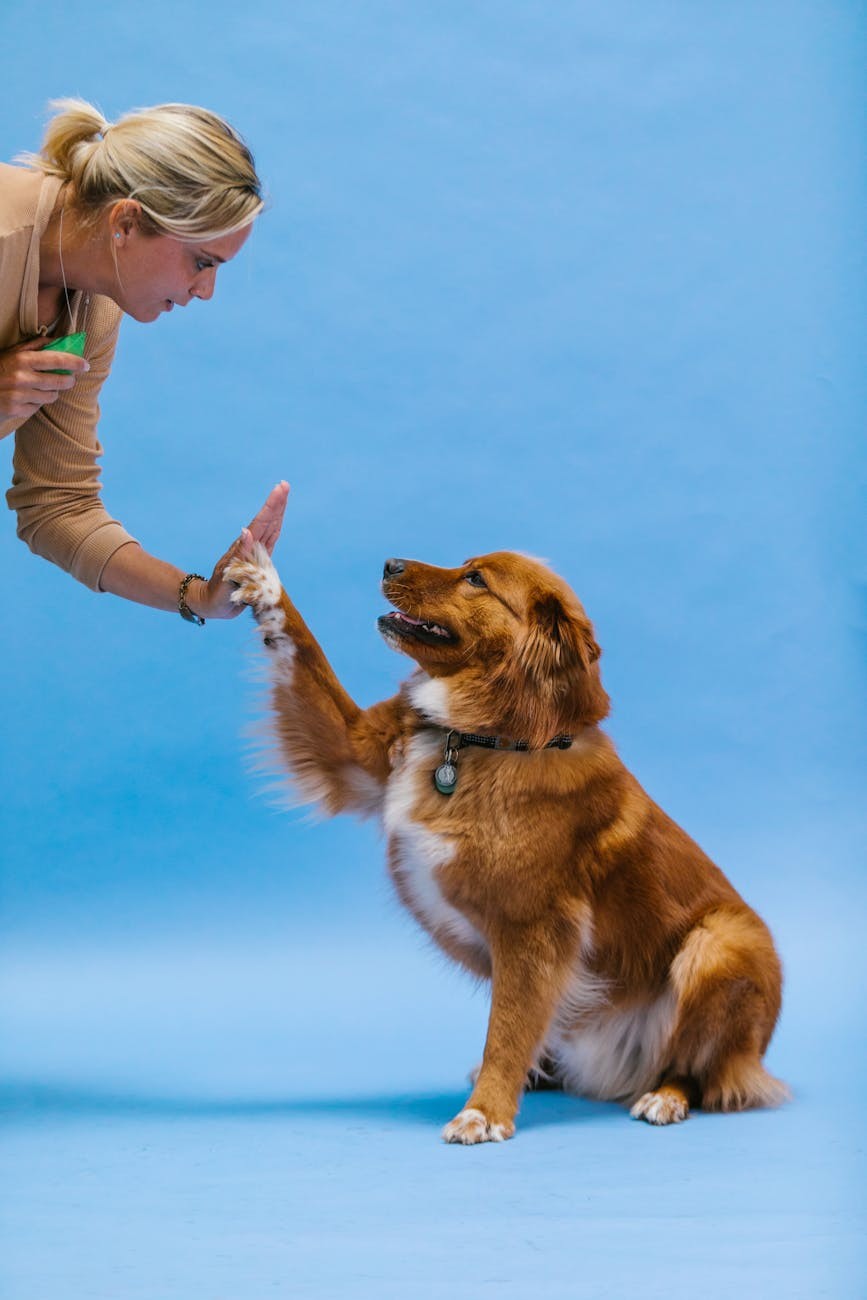
Dogs are intelligent animals that learn through association and reinforcement. If placing a paw on you has historically led to a positive outcome, such as receiving praise, a treat, or immediate attention, they are likely to repeat the behavior. This learned response becomes a go-to method for initiating interaction or getting their needs met. They have effectively trained you, in a way, to respond to their pawing by providing what they desire. This highlights the importance of consistent training and understanding the motivations behind such actions to manage them appropriately and foster a well-behaved companion.
Inherited Instincts from Puppyhood
The act of pawing can be traced back to a dog’s early days as a puppy. Young puppies often paw at their mother to encourage her to nurse or to get her attention. This behavior is instinctual and can carry into adulthood as a way of seeking care, attention, or comfort from their human caregivers, whom they perceive as their maternal figures. It’s a deeply ingrained behavior that connects them to their earliest experiences of nurture and security. While they are no longer seeking milk, the underlying need for connection and care remains, manifesting in this familiar gesture towards their beloved owners.
A Sign of Dominance or Assertiveness
While less common and often misinterpreted, in some contexts, a paw placed on a person can be a subtle assertion of dominance or a request for something more definitive. This is not necessarily aggressive but rather a way of establishing their presence or guiding your actions. For instance, if a dog repeatedly paws at you while you are trying to leave, they might be trying to assert their desire for you to stay or play. Understanding the broader social dynamics and your dog’s typical temperament is key to distinguishing this from other forms of pawing. It’s about understanding the underlying intention in the moment.
Leave a Reply